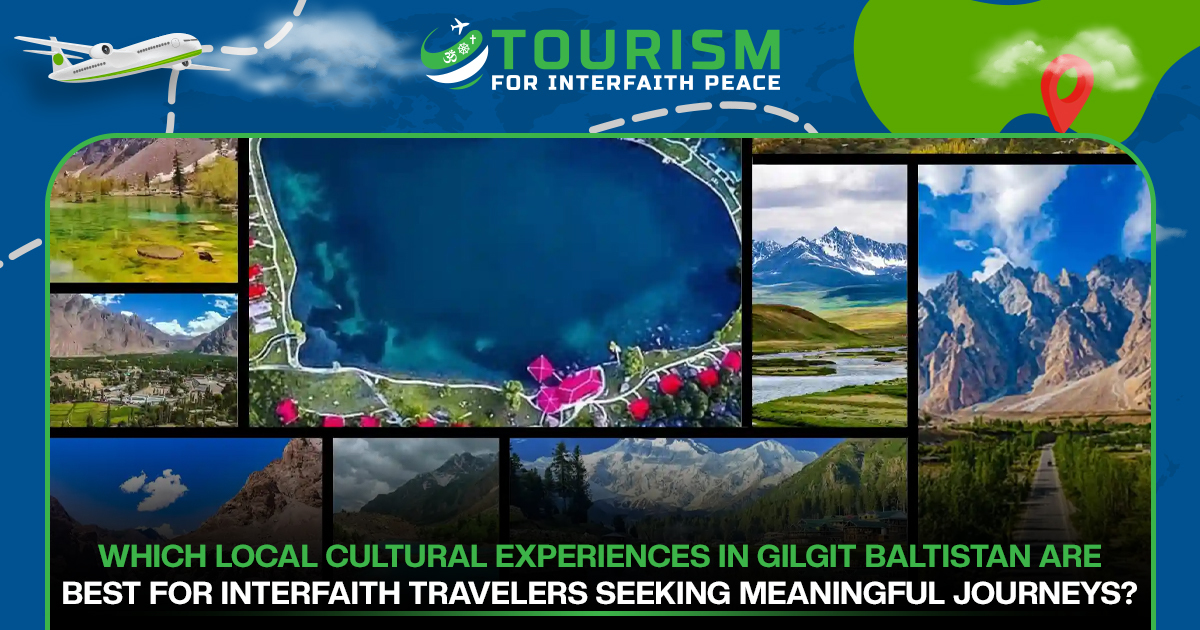
Gilgit Baltistan offers some of the most meaningful local experiences for interfaith travelers by combining ancient heritage, living traditions, and everyday cultural harmony.
Visitors can explore Buddhist rock carvings, engage with local communities, experience shared festivals, and observe how different beliefs have coexisted peacefully for centuries. For those seeking more than sightseeing, interfaith tourism in Gilgit provides a deeper understanding of culture, identity, and human connection.
In this blog, we will highlight Which Local Cultural Experiences in Gilgit Baltistan Are Best for Interfaith Travelers Seeking Meaningful Journeys.
Why Gilgit Baltistan Is Important for Interfaith Tourism
Gilgit Baltistan has historically been a meeting point of civilizations. Located along ancient Silk Route pathways, the region connected South Asia, Central Asia, and East Asia. This movement of traders, monks, and travelers shaped a diverse cultural and spiritual landscape.
For interfaith tourism in Gilgit, this matters because the region reflects:
- Layers of Buddhist, Islamic, and local traditions
- A history of peaceful cultural exchange
- Community systems built on cooperation and respect
In practice, travelers often notice that cultural harmony here is not presented as a concept but lived as a daily reality.
Top Local Cultural Experiences in Gilgit Baltistan for Interfaith Travelers
- Visiting Ancient Buddhist Rock Carvings & Petroglyphs
One of the most powerful experiences in Gilgit cultural tourism is visiting the ancient Buddhist rock carvings scattered along the Karakoram corridor. These carvings are not just historical artifacts; they represent a time when Gilgit Baltistan was part of a larger Buddhist cultural network connected through trade and pilgrimage routes.
For interfaith travelers, this experience provides direct exposure to a pre-Islamic spiritual landscape that still exists alongside present-day Muslim communities. Standing at these sites allows visitors to reflect on how belief systems evolve while leaving behind a shared cultural memory.
In many cases, local guides explain the historical context, showing how traders, monks, and travelers once used these routes. This transforms the visit from simple observation into a deeper understanding of cultural continuity.
- Sharing Meals and Conversations with Local Communities
Among the most meaningful local experiences Gilgit offers is the opportunity to sit with local families and share meals. This is where interfaith tourism in Gilgit becomes personal.
In villages across Hunza and Nagar, hospitality is not a performance but a way of life. Travelers are often welcomed into homes, offered traditional food, and invited into conversations about culture, history, and daily life.
These interactions often lead to organic discussions about identity, tradition, and coexistence. Unlike formal interfaith dialogues, these moments are natural and unstructured, making them more impactful.
For many visitors, this becomes the most memorable part of the journey, where understanding is built through human connection rather than structured learning.
- Experiencing Traditional Festivals and Cultural Gatherings
Festivals in Gilgit Baltistan provide a unique window into shared cultural identity. Events such as harvest festivals and local music gatherings bring communities together in ways that reflect unity rather than division.
For interfaith travelers, these festivals offer:
- Direct participation in local traditions
- Exposure to music, dance, and storytelling
- Opportunities to interact with diverse groups in informal settings
What makes these experiences valuable is their inclusivity. Visitors are not treated as outsiders but as participants, which creates space for genuine cultural exchange.
These shared celebrations reinforce the idea that culture can act as a bridge between different belief systems.
- Exploring Historic Forts and Community Heritage Spaces
Sites like Baltit Fort and Altit Fort are more than architectural landmarks. They represent centuries of social organization, governance, and cultural adaptation.
For travelers interested in heritage travel Pakistan, these locations provide insight into how communities functioned collectively in challenging environments.
Exploring these spaces reveals:
- How leadership systems operated historically
- How communities managed resources and conflicts
- How cultural influences merged over time
For interfaith tourism, these forts demonstrate that coexistence was often built through cooperation and shared survival, not imposed systems.
- Observing Everyday Life in Mountain Communities
One of the most overlooked yet powerful experiences is simply observing daily life in Gilgit Baltistan.
Walking through villages, travelers notice:
- Community cooperation in agriculture and daily tasks
- Respectful social interactions across different groups
- A slower pace of life focused on balance and sustainability
This everyday environment reflects the essence of peace tourism. It shows that harmony is not created through policies alone but through daily behavior and shared values.
For interfaith travelers, this provides a real-world example of how coexistence works beyond theory.
- Engaging with Local Art, Music, and Oral Traditions
Cultural expression in Gilgit Baltistan plays an important role in preserving identity. Traditional music, storytelling, and crafts carry influences from multiple historical periods.
Visitors who engage with these forms of expression gain insight into:
- How cultural memory is preserved
- How stories reflect shared heritage
- How art connects past and present
In many cases, local musicians and storytellers share narratives that include themes of migration, trade, and coexistence, offering a deeper understanding of the region’s interfaith history.
Why These Experiences Matter for Interfaith Travelers
These local experiences are not isolated activities. Together, they create a journey that helps travelers understand:
- How different belief systems have coexisted over time
- How communities maintain harmony in daily life
- How culture can act as a bridge between differences
For those interested in peace tourism, Gilgit Baltistan offers something rare, not a curated narrative, but a lived example of cultural balance.
How Peace Tourism Supports Local Communities
Peace tourism is not only about cultural understanding. It also has a measurable local impact.
In Gilgit Baltistan, responsible tourism contributes to:
- Income generation for local families
- Preservation of cultural heritage
- Support for traditional crafts and practices
- Youth engagement in tourism-related work
When travelers choose local experiences over commercial tourism, they directly support community development.
This aligns with global frameworks such as sustainable tourism models promoted by international organizations, where cultural preservation and economic benefit go together.
The Role of Structured Interfaith Tourism Initiatives
Organizations like Tourism for Interfaith Peace are working to highlight regions like Gilgit Baltistan as key destinations for peace tourism.
Under the vision of Syed Sadat Hussain Shah, such initiatives promote:
- Responsible interfaith travel experiences
- Cultural dialogue and understanding
- Heritage preservation awareness
- Community-centered tourism models
These efforts ensure that tourism is not only about visiting places but about engaging with meaning.
An Interfaith Travel Experience in Gilgit Baltistan
A meaningful journey in Gilgit cultural tourism is often shaped by small, real moments rather than major attractions.
For example, a traveler visiting the ancient Buddhist carvings along the Karakoram route may spend the morning observing centuries-old depictions of Buddha and early inscriptions. Later that same day, they might sit with a local family in Hunza, sharing tea and discussing how traditions have evolved over generations.
In such conversations, locals often speak about heritage with pride but without division. There is an understanding that history in this region belongs to multiple influences.
These experiences create a natural form of interfaith dialogue. There are no formal discussions, yet understanding develops through interaction, curiosity, and respect.
This is what defines peace tourism, learning through presence rather than instruction.
Conclusion
Gilgit Baltistan provides one of the most authentic environments for interfaith travelers seeking meaningful journeys. Its combination of ancient Buddhist heritage, living traditions, and community-based interactions offers a rare opportunity to experience cultural coexistence in practice.
For travelers interested in peace tourism, the region is not just a destination but a learning space. It shows that harmony is not created through theory alone, but through shared experiences, respect, and everyday interaction.
FAQs
Q. What makes Gilgit Baltistan suitable for interfaith tourism?
The region has a history of Buddhist and Islamic influences, along with strong traditions of community harmony and cultural exchange.
Q. What are the best local experiences in Gilgit for travelers?
Visiting Buddhist carvings, engaging with local communities, attending festivals, and exploring historic forts are among the most meaningful experiences.
Q. What is peace tourism in Pakistan?
Peace tourism focuses on travel experiences that promote cultural understanding, dialogue, and harmony between different communities.
Q. How does tourism benefit local communities in Gilgit Baltistan?
Tourism supports local income, preserves heritage, promotes cultural practices, and creates opportunities for youth.
Q. How should interfaith travelers approach cultural experiences?
Travelers should engage respectfully, learn local customs, communicate openly, and focus on understanding rather than observation.