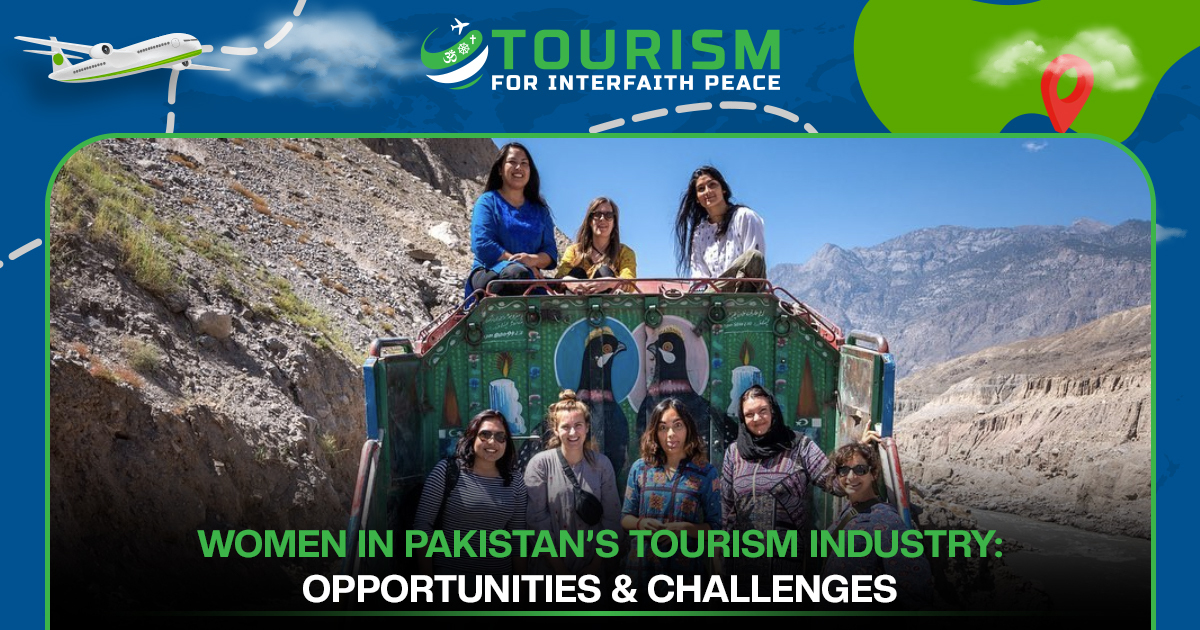
The role of women in tourism in Pakistan is growing, with women working as guides, hosts, hotel staff, trip organisers and business owners. Globally, women make up 54% of the tourism workforce compared with 39% of the wider economy, according to UN Tourism’s 2019 Global Report on Women in Tourism. Pakistan’s wider picture is more uneven: 24% of women were in the labour force in 2023 against 81% of men, based on World Bank data summarised by UN Women. Tourism, with its mix of small businesses and service roles, offers one route to narrow that gap.
What Opportunities Exist for Women in Tourism?
Tourism covers many kinds of work, which gives women several ways in. They can work as tour guides and cultural interpreters, run guesthouses and cafés, manage hotels, organise group trips, sell handicrafts, create travel content or market destinations online. Adventure and eco-tourism add more options, from trekking and climbing instruction to community-based experiences hosted in villages. Handicraft businesses and community-based tourism let women earn income close to home, which can matter where travelling for work is difficult.
Women also build businesses around needs they understand. A Dawn report from August 2025 described women-led retreats and group trips that give other women a way to travel safely, and noted more women entering the sector as local guides, café owners and climbing instructors. Globally, UN Tourism puts women at 56% of the hospitality workforce, so hospitality is already a field where many women work.
Can Women Work as Tour Guides in Pakistan?
Yes. Women work as tour guides in Pakistan, and there is visible demand, particularly from women travellers who prefer a female guide. The Dawn report mentioned a woman guide who received the Best Tour Guide Award at the National Tourism Awards 2024.
Becoming a guide generally rests on local knowledge, language skills, safety and first-aid training, and the ability to tell a place’s story well. Practical steps include shadowing an experienced guide, studying the history and ecology of a chosen region, learning a second language and keeping a record of reviews. Licensing and training requirements can differ by region, so check with the relevant tourism authority.
What Challenges Do Female Tourism Entrepreneurs Face?
Several barriers appear repeatedly. Social expectations can limit where women travel for work and whether families support a tourism career. A study of women producing tourism in Chilas and Abbottabad found that many still face challenges from people who hold to strict divisions of labour between men and women.
Mobility and safety concerns matter in a sector with long hours, remote destinations and late returns. Access to finance is another recurring issue, one the World Bank and other development bodies have highlighted for women across Pakistan. Globally, UN Tourism data also show women well represented in service roles but poorly represented at professional and leadership levels.
How Can Women Become Successful Tourism Entrepreneurs?
Starting small helps. A homestay, a local food experience, a guided walk or a handicraft stall needs less capital than a hotel and lets an entrepreneur test demand. Clear pricing, good photographs and honest descriptions build a reputation online. Digital tools lower some barriers: a phone, a booking channel and a social profile can reach travellers without a shopfront.
Partnerships with tour operators, hotels and other women-led businesses can widen reach. Training in bookkeeping, digital marketing and customer service adds resilience, and planning for safety, with trusted drivers, clear itineraries and emergency contacts, protects both guests and hosts.
How Can Pakistan Create a More Inclusive Tourism Industry?
Inclusion needs action from several parties. Training and mentorship can help women build skills and networks. Employers can offer safer working conditions, flexible scheduling and clear complaint routes. Financial institutions can design products suited to small tourism businesses, and government and private operators can work together on safe transport, licensing and destination infrastructure.
Data helps too: tracking women’s participation in tourism jobs would show where support is most needed. The aim is to make women-led initiatives easier to start and sustain, rather than exceptional. Public-private collaboration is central, because destination planning that includes women’s needs from the start is more likely to work than retrofitting them later.
What Role Can Tourism for Interfaith Peace Play?
Tourism for Interfaith Peace (TIP) focuses on interfaith tourism, an area where respectful, welcoming hosting matters. Inclusive tourism and interfaith tourism share a principle: visitors and hosts both benefit when more people can take part.
Organisations such as TIP can contribute by promoting awareness, bringing stakeholders together and encouraging responsible destination development, all of which can create more room for women as guides, hosts and entrepreneurs.
Conclusion: Empowering Women to Shape Pakistan’s Tourism Future
Women already shape Pakistan’s tourism story as guides, hosts, founders and managers. Removing practical barriers, from finance to safe mobility, would let more of them take part.
An inclusive industry is also a more competitive one, because it draws on more talent and serves more travellers. Progress will be measured in opportunities that women can actually reach.