Walk through the old city of Lahore and you pass a Mughal mosque, a Sikh gurdwara and a Hindu temple site within a short drive of each other. Travel a few hours northwest and you reach Buddhist monasteries that were abandoned over a thousand years ago. The religious heritage of Pakistan is not one story. It is several, layered on the same ground.
At Tourism for Interfaith Peace (TIP), we think knowing those layers is the first step toward visiting them well. Here is a guide to the main ones.
What Makes Pakistan’s Religious Heritage Unique?
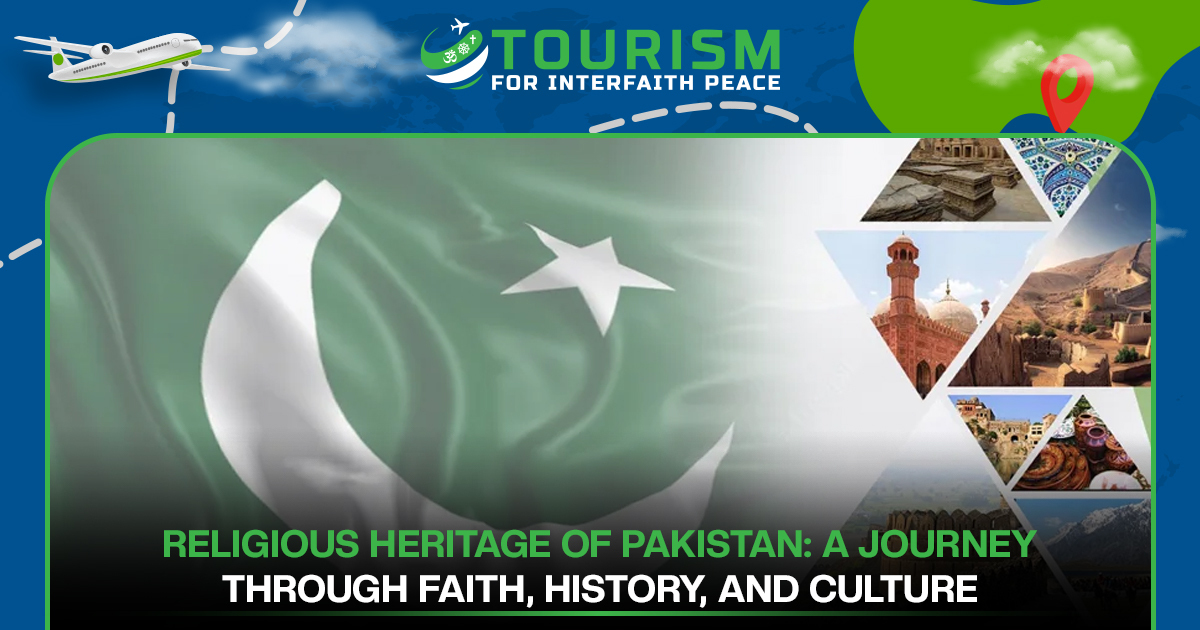
Pakistan sits where the Indus Valley, Central Asia and the Iranian plateau meet. Traders, monks, armies and mystics crossed this land for thousands of years, and many of them stayed. The result is a country where Buddhist, Hindu, Sikh, Christian and Islamic sites often share the same provinces, and sometimes the same city.
Which religions have historical roots here? All five, over different periods. Buddhism and Hindu traditions appear earliest in the written and archaeological record. Islam reached Sindh in the early eighth century and spread across the region afterward. Sikhism began in Punjab in the fifteenth century. Christian communities grew mainly during the colonial period.
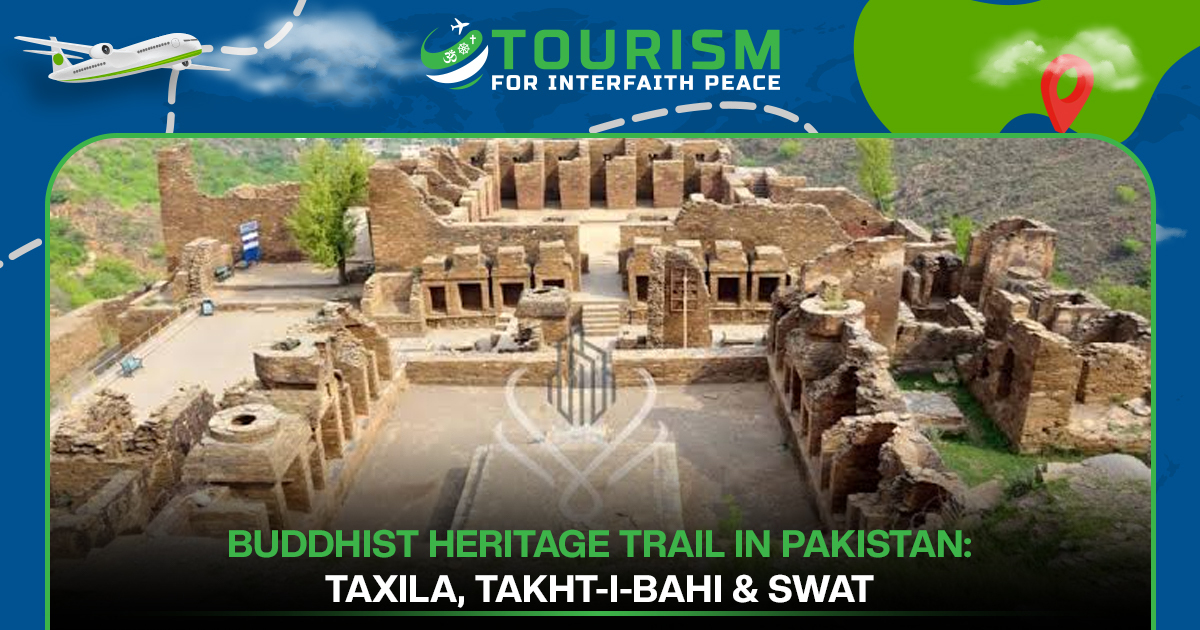
Buddhist Heritage in Pakistan: Taxila and Gandhara
Gandhara, which covered parts of today’s Khyber Pakhtunkhwa and northern Punjab, was a major Buddhist centre from roughly the first century BCE to the fifth century CE. Its artists mixed Buddhist themes with Greco-Roman style, producing some of the earliest images of the Buddha in human form. Scholars still debate whether Gandhara or Mathura came first, so it is fairer to call them among the earliest.
So why does Taxila matter? It was a university town, a trade stop and a monastic centre, and its ruins include the Dharmarajika stupa, the Jaulian monastery and the Bhir Mound and Sirkap city sites. UNESCO inscribed Taxila as a World Heritage Site in 1980. It did the same that year for Takht-i-Bahi, a hilltop monastery complex near Mardan, together with the nearby remains at Sahr-i-Bahlol.
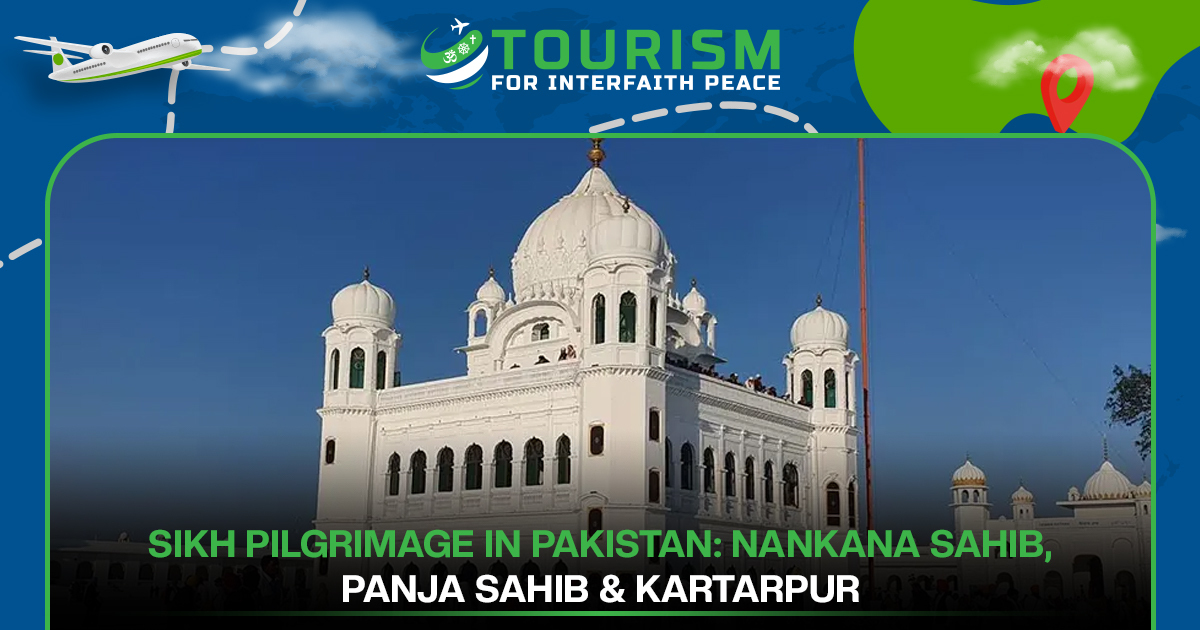
Sikh Heritage in Pakistan: Nankana Sahib and Kartarpur
Why is Nankana Sahib important to Sikh heritage? It is the birthplace of Guru Nanak, the founder of Sikhism, born in 1469. Gurdwara Janam Asthan marks the spot, and pilgrims from around the world gather there each year around his birth anniversary in November.
Kartarpur, in Narowal district, is where Sikh tradition says Guru Nanak settled in his later years and died in 1539. Gurdwara Darbar Sahib stands there today. In November 2019 a dedicated corridor opened so Sikh pilgrims from India could visit without a conventional visa. Rules and permits can change, so check official notices before planning a trip.
Another well-known site is Gurdwara Panja Sahib at Hasan Abdal. Its link to Guru Nanak rests on Sikh tradition and belief, which is how we describe it here, rather than on archaeological proof.
Hindu Temples in Pakistan
Pakistan has a long Hindu history, and several temples are still in use. Katas Raj, in Chakwal district, is a complex of shrines around a sacred pond, linked in Hindu tradition to Shiva. Hinglaj Mata in Balochistan’s Lasbela district is one of the region’s best-known pilgrimage sites and draws devotees every spring. Sindh, where most of Pakistan’s Hindus live, has many active temples.
Condition varies widely. Some temples are well kept, while others have suffered from neglect or damage. That is one reason documenting and protecting them matters.
Christian Heritage in Pakistan
Which historical churches represent Christian heritage here? St. Patrick’s Cathedral in Karachi, a Catholic church from the late nineteenth century, is a landmark of the city’s old centre. The Anglican Cathedral Church of the Resurrection in Lahore, built in the 1880s, reflects the colonial-era architecture that shaped many Pakistani cities. Christian communities also built schools and hospitals that still serve people of every background.
Islamic Heritage Sites in Pakistan
Islamic heritage is the most visible layer, and it is varied. The Badshahi Mosque in Lahore dates to the 1670s, and the Wazir Khan Mosque, from the seventeenth century, is known for its tilework and fresco painting. Makli Necropolis near Thatta, a UNESCO site since 1981, holds hundreds of thousands of graves spread across several centuries. In Multan, the shrine of Shah Rukn-e-Alam shows early Sufi-era architecture. Sufi shrines, like Data Darbar in Lahore, often welcome visitors of many backgrounds.
How Can Religious Tourism Promote Interfaith Harmony?
Standing in a place that matters deeply to someone else changes how you think about them. Heritage tourism puts people in front of each other’s sacred spaces, and it gives local communities a reason to look after them. It also funds conservation, as long as visitors spend locally and respect the rules.
Responsible visitors can start with a few habits:
- Dress modestly and cover your head where it is customary.
- Remove shoes before entering worship areas.
- Ask before photographing people at prayer.
- Check access and permits with official bodies such as the provincial archaeology departments or the Evacuee Trust Property Board, which manages many Sikh and Hindu sites.
Why Should Pakistan Preserve Its Religious Heritage?
These places record how different communities lived and believed. Once a stupa collapses or a temple wall falls, that record is gone. Preservation also supports education, local jobs and a more complete national story, one that includes everyone who shaped it.
Frequently Asked Questions
What are the most important religious heritage sites in Pakistan?
Taxila, Takht-i-Bahi, Nankana Sahib, Kartarpur, Katas Raj, Hinglaj Mata, the Badshahi Mosque, Makli Necropolis and historic churches in Karachi and Lahore are among the best known.
Can international visitors explore religious sites in Pakistan?
Many sites welcome visitors, but access, permits and security arrangements vary by location and change over time. Check current guidance from official tourism and heritage authorities before you travel.
Which Pakistani sites are UNESCO World Heritage Sites?
Religious or spiritually significant ones include Taxila, Takht-i-Bahi and Sahr-i-Bahlol, and Makli Necropolis. Other listed sites include Mohenjo-daro, Lahore Fort and Shalimar Gardens, and Rohtas Fort.
What is the difference between historical evidence and religious tradition?
Archaeology and written records show when and how a site was built. Tradition records what believers hold sacred, such as a saint’s visit. Both matter, and good guides separate them.
How should visitors behave at sacred sites?
Dress modestly, follow local customs, ask before taking photographs and be mindful of worshippers.
Conclusion
Pakistan’s religious heritage cannot be reduced to a single faith or century. It runs from Gandhara’s monasteries to Mughal mosques, from Guru Nanak’s birthplace to colonial-era cathedrals. Protecting it protects a shared record, and visiting it thoughtfully is one of the simplest ways to help.
Ready to learn more? Explore our guides on religious heritage sites, pilgrimage routes and sustainable religious tourism, then plan a visit with TIP that respects every community whose story is told along the way.