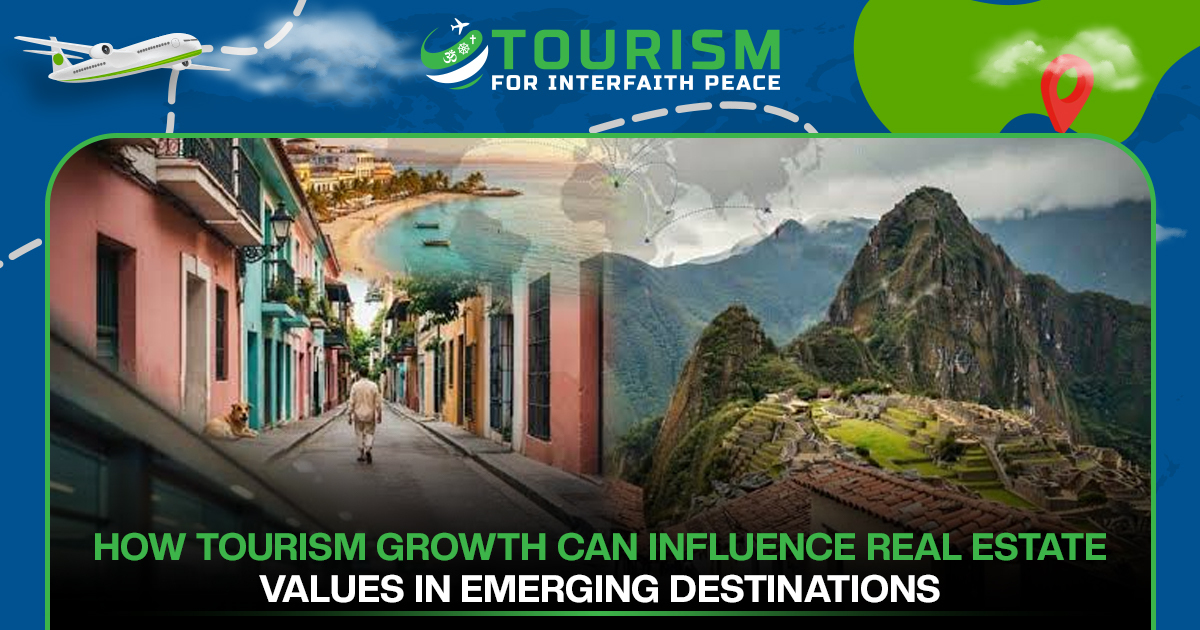
- A tourism destination is generally more investment-ready when it has demonstrated visitor demand, reliable accessibility and infrastructure, a functioning tourism ecosystem, clear investment and regulatory conditions, and a sustainable path for long-term growth.
- Scenery and social-media popularity alone do not make a destination investment-ready.
- The strongest destinations score reasonably well across all five factors rather than being exceptional in only one.
Five Things I Look for Before Calling a Destination Investment-Ready
A destination can have spectacular mountains, a pristine coastline, or centuries of cultural heritage and still be a poor investment. I’ve learned to separate two questions that get treated as one. The first is whether a place is worth visiting. The second is whether it is worth building a business around. Tourist appeal answers the first. Investment readiness answers the second, and it asks something more specific: can visitors actually reach the destination, stay comfortably, spend money, come back, and support a tourism economy that holds up over time?
When I assess a destination, I look beyond the postcard. Here are the five things I check first.
1. I Look for Evidence of Real Tourism Demand
Interest has to translate into actual visitor activity before it means anything to an investor. I look at visitor numbers where they’re published, occupancy trends, average length of stay, and whether people are coming back or just passing through once. Domestic tourism often matters as much as international arrivals, sometimes more, since it tends to be steadier and less exposed to travel disruptions abroad.
The distinction I care about most is between “people want to visit” and “people are willing to spend money there.” A destination trending on social media has demand in the loosest sense. A destination where visitors are booking hotel rooms, hiring guides, and returning for a second trip has demand in the sense that matters to a balance sheet. Emerging destinations without a long visitor history can still be compelling, but the case has to rest on something more concrete than search interest or seasonal spikes.
2. I Look at Accessibility and Infrastructure
Tourism investment doesn’t happen in isolation from the basics. Roads, airports, public transport, and how reliably travel time actually holds up matter more than most people expect going in. So do mobile coverage, internet access, electricity, water supply, waste management, and whether healthcare and emergency services are within reach if something goes wrong.
An attraction may bring visitors once. Reliable infrastructure helps bring them back. Poor road conditions or unpredictable power can turn a strong attraction into an unreliable business environment, and that unreliability shows up directly in hotel occupancy, property values, operating costs, and how visitors rate their experience afterward. Infrastructure gaps are not automatically disqualifying, but they change the risk profile and the capital required, and any serious evaluation has to account for that upfront rather than after the fact.
3. I Look for a Tourism Ecosystem, Not a Single Attraction
One famous site does not make a market. A mature destination needs accommodation, restaurants, retail, transportation, tour operators, local guides, and enough surrounding experiences to give visitors a reason to stay more than a day.
This is where the multiplier effect comes in. A hotel performs better when there’s something to do nearby after checkout. A resort performs better when local operators offer excursions, cultural experiences, or adventure activities that extend a visitor’s stay. A destination gets structurally stronger when multiple, independent businesses are all drawing income from the same visitor traffic, because that spreads risk and signals that the local economy has more than one point of failure.
4. I Examine Investor Confidence, Policy, and Development Conditions
This is the section that gets skipped by people evaluating tourism as travelers rather than investors, and it’s usually the one that determines whether a project survives. Land ownership clarity, zoning, permit timelines, the broader regulatory environment, and how predictable the rules are matter as much as the physical asset itself.
Investors aren’t only buying land or a building. They’re buying the predictability of the environment around it: how development plans are enforced, how security is managed, how transparent the approval process is, and how consistent taxation and investment protection are over the life of the project. Anyone looking at Pakistan specifically should verify current laws, approvals, zoning, and ownership requirements directly with the relevant authorities before committing capital, since conditions vary by province and by project type, and generic assumptions are a common source of costly surprises.
5. I Look for Long-Term Sustainability and Room to Grow
Investment readiness isn’t only about today’s demand. I look at carrying capacity, water availability, waste management, and whether development plans account for environmental limits rather than ignoring them. Seasonality matters too, along with local community participation, since destinations that exclude the surrounding community from tourism income tend to accumulate friction over time.
A destination can become less attractive if development erodes the very natural or cultural assets that drew visitors in the first place. The strongest opportunities balance tourism growth, investor returns, community benefit, and environmental protection, rather than maximizing any one of those at the expense of the others.
The Five-Test Framework
Put together, the five criteria are demand, accessibility, tourism ecosystem, investor confidence, and sustainable growth. The strongest destinations score reasonably well across all five rather than being exceptional in just one.
Weak demand plus strong scenery makes a tourist attraction, not necessarily an investment case. Strong demand plus weak infrastructure is an opportunity with real execution risk attached. Strong demand, working infrastructure, a functioning ecosystem, clear investment conditions, and sustainable growth together make a materially stronger case, and that combination, not any single factor, is what separates investment-ready destinations from promising ones.
What This Means for Tourism Investment in Pakistan
Pakistan’s tourism potential runs across very different categories: mountain and adventure tourism in the north, religious and cultural heritage tourism tied to its holy sites and historic cities, coastal areas, and a large and growing base of domestic travelers. Travel and tourism contributed close to 5.9 percent of Pakistan’s GDP and supported an estimated 4.2 million jobs in 2022, according to WTTC-based research cited by the Pakistan Business Council, figures that point to real economic weight even though the sector remains underdeveloped relative to its potential.
That potential should be assessed destination by destination, not as one national tourism market. A well-connected heritage site with functioning infrastructure is a different investment case than a remote valley with extraordinary scenery and no road access. Emerging destinations can offer genuine opportunity precisely because they’re early, but that same status usually means higher infrastructure risk, less established regulatory precedent, and a longer runway before an ecosystem forms around them. None of that makes them uninvestable. It makes them a different kind of bet, one that has to be underwritten with that risk in mind rather than assumed away.
The Bottom Line
I don’t call a destination investment-ready because it looks beautiful. I call it investment-ready when the fundamentals show that visitors can arrive, stay, spend, return, and that businesses around them can operate sustainably. Scenery gets a place noticed. Fundamentals are what get capital deployed responsibly.
That same philosophy sits behind how TIP approaches destination development in Pakistan, grounded in the country’s religious heritage and cultural tourism assets, with an emphasis on peacebuilding, community participation, and preserving the sites that make these destinations worth visiting in the first place. For readers thinking about how tourism growth can influence real estate values in emerging destinations, it’s worth treating each location on its own fundamentals rather than on reputation alone.
Frequently Asked Questions
What makes a tourism destination investment-ready?
A destination becomes investment-ready when demonstrated visitor demand, reliable infrastructure, a functioning tourism ecosystem, clear investment and regulatory conditions, and sustainable growth potential are all present together, rather than relying on scenery or popularity alone.
How do you evaluate tourism investment opportunities?
Evaluate visitor demand trends, accessibility and infrastructure quality, whether a supporting ecosystem of businesses exists, the clarity of land, zoning, and regulatory conditions, and whether growth can be sustained without damaging the assets that attract visitors.
Why is infrastructure important for tourism investment?
Infrastructure affects whether visitors can reach and enjoy a destination reliably. Roads, utilities, connectivity, and emergency services directly influence hotel occupancy, operating costs, property values, and overall investment risk.
What should investors check before investing in a tourism destination?
Investors should check visitor demand data, infrastructure reliability, the presence of a broader tourism ecosystem, land ownership and zoning clarity, current regulations, and environmental or carrying-capacity constraints, ideally verified with local authorities.
Is tourism investment in Pakistan a good opportunity?
Pakistan has meaningful tourism potential across mountain, cultural, religious, and coastal destinations, but opportunity varies significantly by location. Each destination should be assessed individually against demand, infrastructure, and regulatory fundamentals rather than treated as one uniform market.