Walk into the Wazir Khan Mosque in Lahore at dusk. The tile work — cobalt, ivory, saffron — doesn’t announce a religion. It announces a civilization. Strangers from different faiths stop, look up, and go quiet. That silence is the beginning of something.
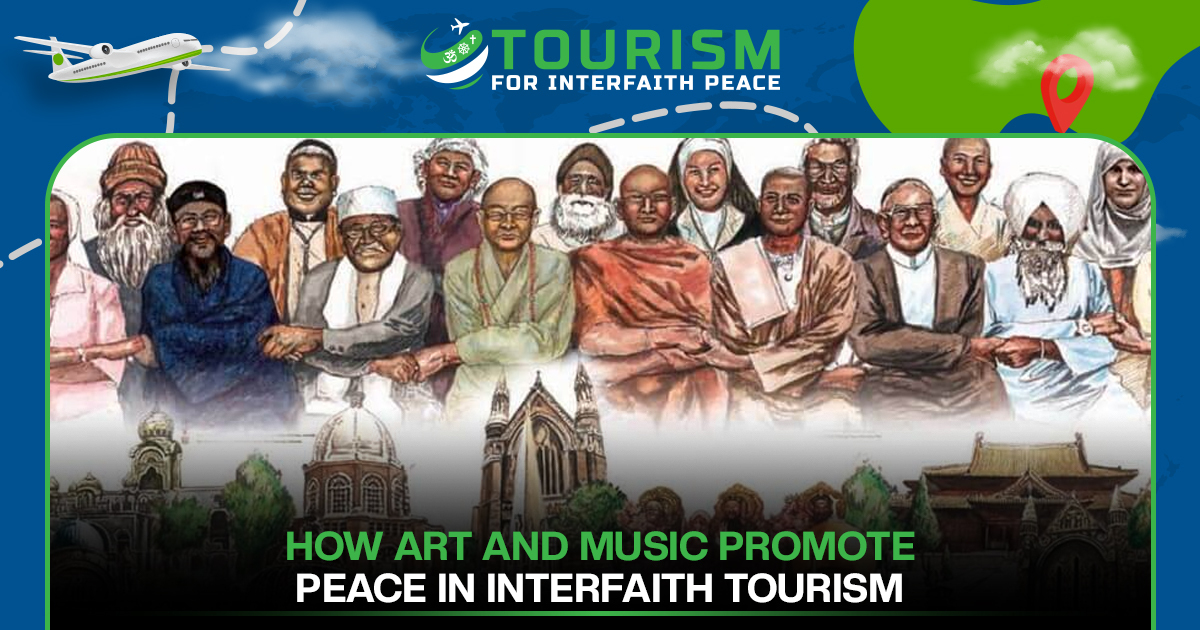
This is what art does in interfaith tourism. It removes the need for explanation. Music does the same thing — a Sufi qawwali in a candlelit shrine reaches listeners who don’t understand a single word of Urdu and still feel moved. These aren’t accidents of aesthetics. They are the mechanisms through which travel becomes genuine cultural exchange, and through which religious harmony through travel becomes more than a slogan.
Across the world, travelers are increasingly drawn to destinations not just for scenery but for meaning. Interfaith tourism — travel that deliberately engages multiple religious and cultural traditions — is growing. And at its heart, more often than not, you find art and music.
What Is Interfaith Tourism?
Interfaith tourism is travel shaped by curiosity about how different faiths coexist, share history, and build communities together. It isn’t a religious pilgrimage in the traditional sense, though it may include sacred sites. It’s something broader: the deliberate encounter with traditions other than one’s own. For a full grounding in the concept, the what is interfaith tourism and how travel promotes global peace guide from TIP covers it in depth.
What distinguishes it from ordinary cultural tourism is intentionality. The traveler isn’t just passing through a mosque or a temple. They are engaging — with history, with community, with the people who hold these spaces sacred. Art and music are often what make that engagement possible.
How Art Builds Bridges Between Faiths
Visual art has always crossed religious lines in ways that theology sometimes couldn’t. The geometric patterns on Islamic architecture share mathematical DNA with the mandalas of Hindu and Buddhist traditions. Medieval Christian illuminated manuscripts borrowed freely from Arab calligraphy. Shared visual languages exist whether or not the traditions that produced them acknowledged the connection.
In interfaith tourism, this matters practically. A traveler visiting the Lahore Fort doesn’t need a theology degree to appreciate the Mughal fusion of Persian, Hindu, and Central Asian aesthetics. What they see — the carved jharokhas, the pietra dura inlay — is centuries of cultural negotiation made physical. Heritage sites like this are, in effect, peace documents.
Museums and craft traditions extend the same logic. When a tourist sits with an artisan in Taxila learning the techniques behind Buddhist Gandharan sculpture, they’re not just learning craft. They’re participating in a lineage that predates contemporary religious divisions. Cultural tourism Pakistan builds much of its most compelling offer around exactly this kind of encounter: art that existed before the lines were drawn.
Music as a Universal Language of Peace
Does music actually transcend religious difference, or is that just a cliché? Spend an evening at the shrine of Data Ganj Bakhsh in Lahore during the annual urs celebrations, surrounded by thousands of people from different backgrounds, all absorbed in the same qawwali performance, and the question answers itself.
Sufi music is the most obvious example, but it’s not the only one. Devotional folk traditions across South Asia — bhajans, kirtan, geet — share melodic structures and emotional registers that cut across Hindu, Muslim, and Sikh boundaries. These traditions didn’t develop in isolation; they developed in conversation. That history is audible.
Music festivals have become one of the most effective tools in music for cultural harmony. The Lahore Music Meet, Rafi Peer Theatre Workshop’s World Performing Arts Festival, and smaller shrine-based gatherings draw audiences who come for the music and leave with something harder to name — a felt sense that the distance between different traditions is not as great as it looked from the outside.
Cultural Experiences That Strengthen Harmony
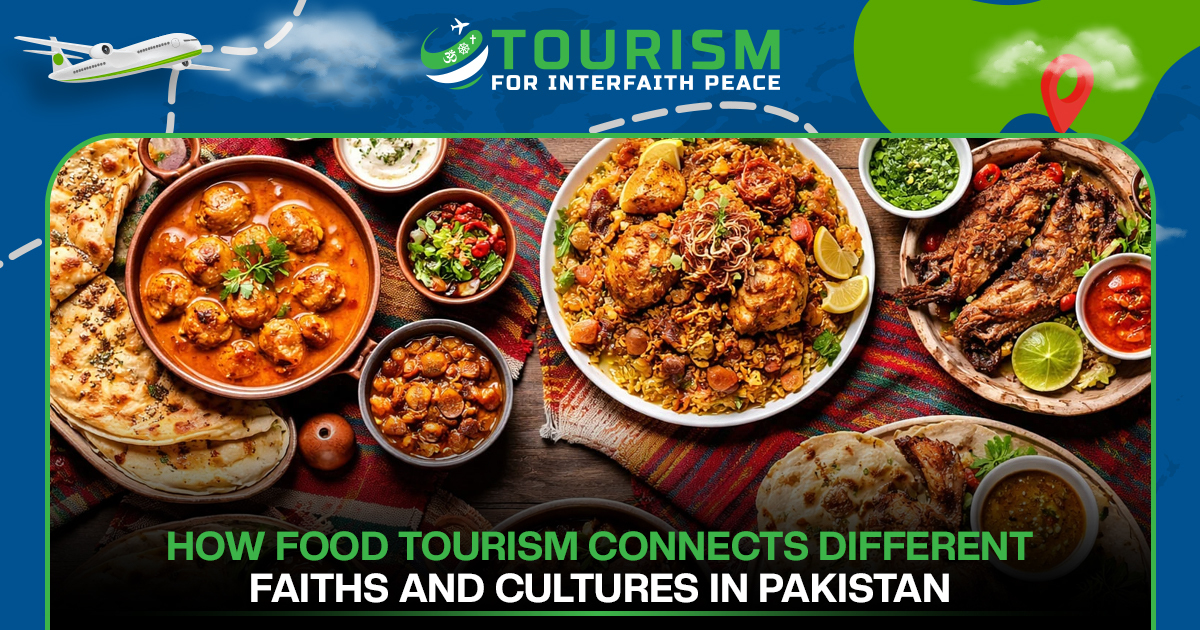
The experiences that stick with travelers in interfaith tourism are rarely the passive ones. They’re the participatory moments: cooking a shared meal during a religious festival, learning a folk dance, attending a community gathering where different faiths are all represented. As explored in TIP’s resource on how cultural experiences foster peace and understanding in tourism, these encounters reshape assumptions in ways that information alone never does.
There’s a psychological dimension here. Contact theory — the idea that prejudice decreases when people from different groups interact under the right conditions — has decades of research behind it. Shared cultural experiences, particularly around art and music, create exactly those conditions: equal footing, a common focus, emotional engagement. A traveler who attends a Holi celebration alongside Hindu, Muslim, and Christian neighbors in Sindh isn’t just watching a festival. They’re part of a social experiment that has been running for centuries.
Sacred Spaces and Shared Heritage
The physical sites of interfaith tourism carry their own argument. Pakistan alone holds an extraordinary concentration of sacred spaces from multiple traditions — Sikh gurdwaras in Punjab, Hindu temples in Sindh, Buddhist stupas in Khyber Pakhtunkhwa, Sufi shrines scattered across every province. TIP’s guide to sacred sites across pakistan by city and region maps this heritage in detail.
When travelers visit these spaces with genuine curiosity rather than tourism-box-checking, something changes in how they think about the places. The Katas Raj temples, preserved and visited by Hindu pilgrims with the cooperation of local Muslim communities, aren’t just archeological sites. They’re evidence of a capacity for coexistence that contemporary political narratives often obscure. Sacred spaces, approached through the lens of art and peace tourism, become arguments against the idea that civilizations are fated to clash.
Festivals, Music, and Art as Active Peace Tools
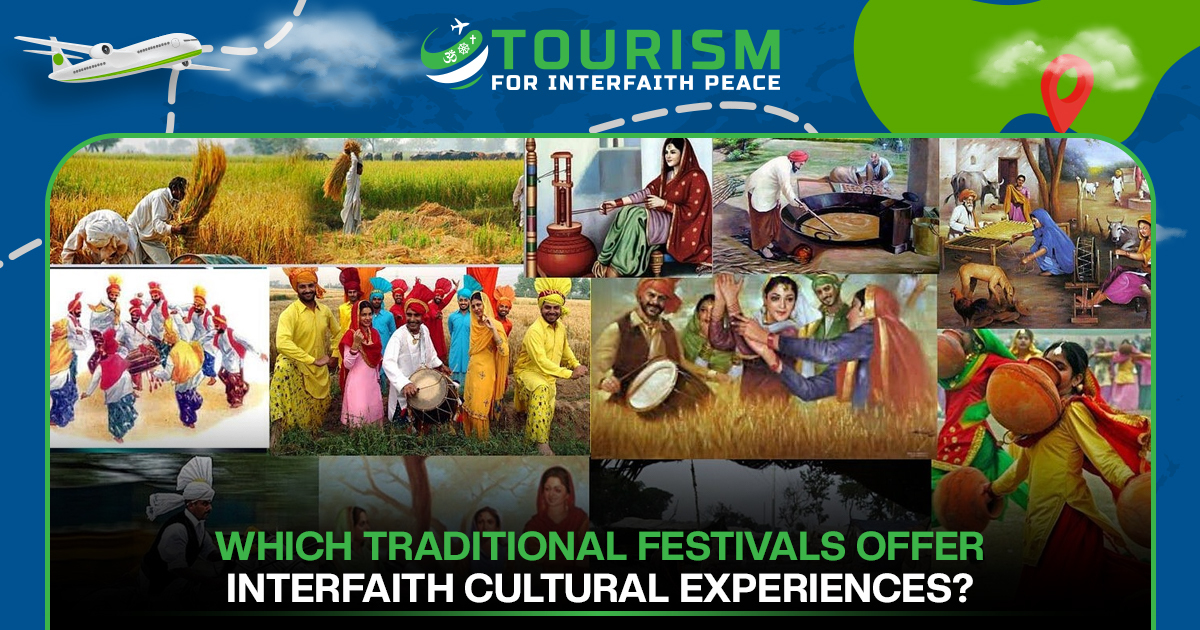
Religious festivals, when they become part of interfaith tourism itineraries, do more than offer spectacle. They offer access to living tradition — the way communities actually organize meaning. Pakistan’s religious calendar is dense with such occasions. As documented in TIP’s coverage of how religious festivals in pakistan reflect cultural harmony, events like Eid, Diwali, Baisakhi, and Easter are often celebrated in ways that involve neighbors across faith lines.
The artistic exchanges that happen around these festivals — street murals commissioned jointly by community organizations, musical performances that deliberately mix traditions, craft fairs where artisans from different backgrounds share stalls — are where art and peace tourism becomes most concrete. These aren’t museum experiences. They’re neighborhoods doing what neighborhoods have always done: negotiating how to live together, through shared culture.
Why It Matters for Global Peace
Travel has always been a form of low-level diplomacy. Before governments, merchants and pilgrims were building relationships across religious and cultural lines. What’s different now is that interfaith tourism can be designed — structured to maximize genuine encounter rather than superficial sightseeing.
Young travelers, in particular, are hungry for this kind of depth. A generation that has grown up with social media’s tendency to harden group identities is often surprisingly open to experiences that complicate those identities. An immersive week in Lahore — visiting shrines, attending music performances, working with local artisans — builds what researchers call cultural intelligence: the practical capacity to navigate differences. That capacity doesn’t disappear when the traveler goes home.
Art and music are the fastest routes to cultural intelligence. They bypass the defenses that political or religious discussions tend to trigger. They create shared reference points. And in interfaith tourism, they do something that arguments rarely manage: they make the case for coexistence feel obvious rather than controversial.
The Case for Traveling Differently
The world has no shortage of reasons for division. What it often lacks is experiences that make unity feel real — not as an abstraction, but as something a person has actually felt, standing in a courtyard while a musician plays, surrounded by strangers who have temporarily forgotten to be strangers.
Interfaith tourism, built around art and music, offers those experiences at scale. It won’t solve geopolitics. But it builds the human infrastructure that better politics eventually depends on: people who have been somewhere unfamiliar and come back changed.
Travel responsibly. Travel curiously. And when you arrive somewhere, let the art and the music do their work.