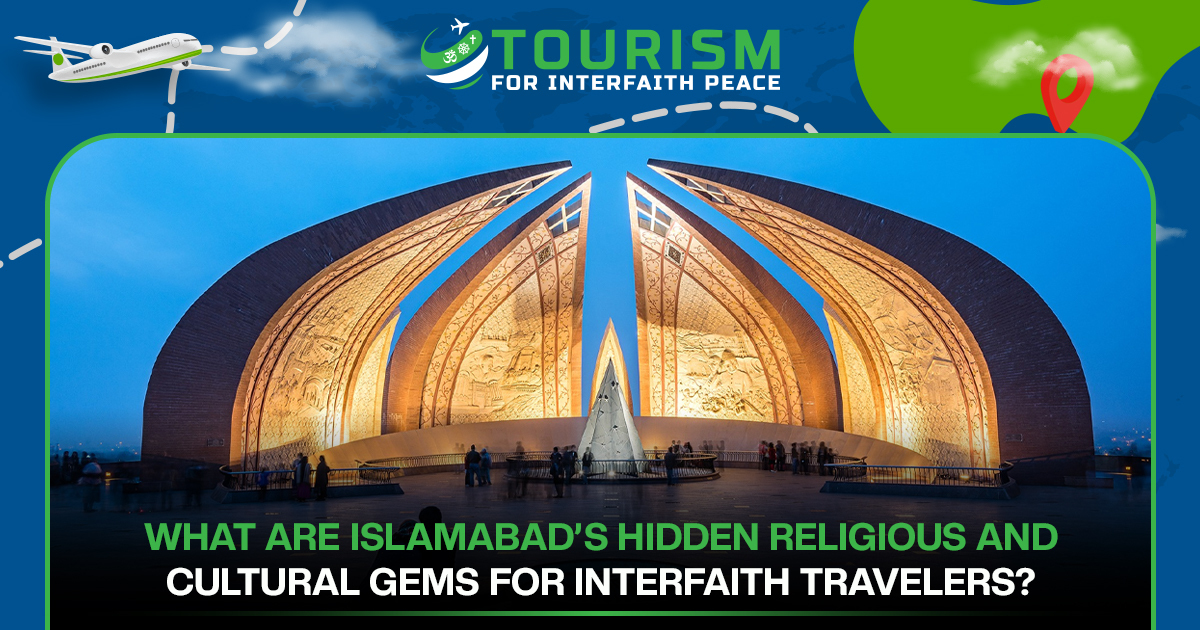
Islamabad offers quiet, meaningful places where people of different faiths can explore shared values, history, and culture without crowds or tension. Beyond its government buildings and famous mosque, the city holds several sacred sites and cultural landmarks that support Islamabad’s interfaith tourism and peaceful travel experiences.
For interfaith travelers, Islamabad works differently from older historic cities. Its planned layout, calm environment, and proximity to religious spaces make it easier to understand diversity without feeling overwhelmed. This is why Islamabad is increasingly seen as a center for peace tourism rather than just a political capital.
Why Islamabad Matters for Interfaith and Peace Tourism
Islamabad matters because it allows people of different beliefs to experience faith, culture, and daily life side by side in a respectful setting. Unlike crowded heritage cities, the capital offers space, order, and accessibility, which helps first-time interfaith travelers feel comfortable and safe.
Religious spaces in Islamabad are not hidden behind barriers. They exist within neighborhoods, educational zones, and cultural centers. This everyday visibility of diversity is what gives the city its quiet interfaith strength.
How Islamabad Enables Peace Tourism in Practical Ways
Islamabad supports peace tourism through design, governance, and social behavior rather than slogans. The city’s organized transport, security structure, and public spaces allow visitors to move between sacred and cultural sites without stress.
Peace tourism works best where people feel safe enough to listen and learn. Islamabad provides that environment, especially for travelers who want thoughtful experiences instead of fast sightseeing.
How Interfaith Travelers Can Explore Islamabad Meaningfully
Interfaith travelers get the most value from Islamabad by slowing down and focusing on understanding rather than covering many locations. Walking through residential sectors, visiting museums, attending cultural events, and observing religious spaces respectfully offer deeper insight than guided bus tours.
This approach reflects how Islamabad interfaith tourism is meant to work quietly, respectfully, and with room for reflection.
Sacred Sites in Islamabad Beyond the Famous Landmarks
Islamabad’s sacred sites go beyond well-known places and include community-focused spaces that reflect lived religious diversity across the city. These locations help interfaith travelers understand how faith exists as part of everyday life rather than as isolated monuments.
Sacred sites in Islamabad include:
- Faisal Mosque as an open cultural space
Visited by people of different faiths to understand Islamic architecture, community practices, and Pakistan’s modern religious identity in a calm and welcoming environment. - Churches in residential sectors
Located within everyday neighborhoods, these churches show how Christian communities practice faith as part of normal city life and are often included in interfaith walks and educational visits. - Hindu Temple in Islamabad
Represents an important step toward religious inclusion and recognition, offering interfaith travelers a clear example of how modern Pakistan is accommodating religious diversity in its capital.
Together, these sacred sites in Islamabad help travelers see faith as a shared social presence rather than a divided one.
Cultural Landmarks in Islamabad That Support Interfaith Understanding
Cultural landmarks often explain diversity better than formal religious sites because they show how people live, express identity, and share traditions. In Islamabad, these spaces play a key role in supporting interfaith tourism through culture rather than theology.
Important cultural landmarks include:
- Lok Virsa Museum and Cultural Complex
Presents traditions, clothing, music, rituals, and daily life from communities across Pakistan, including religious minorities, helping travelers understand how faith and culture are connected. - Pakistan National Council of Arts (PNCA)
Hosts exhibitions, performances, and cultural programs featuring voices from diverse regions and belief systems, encouraging dialogue through art and shared creativity.
These cultural landmarks make Islamabad interfaith tourism more balanced, educational, and grounded in real social experience.
Conclusion
Islamabad’s hidden religious and cultural gems show that interfaith understanding does not always come from grand monuments. Through its sacred sites, cultural landmarks, and calm urban life, the city presents a practical model of peace tourism rooted in coexistence, access, and everyday respect between communities.
For interfaith travelers seeking clarity rather than spectacle, Islamabad offers something rare. It provides the space to observe, listen, and understand different beliefs without pressure or noise, allowing meaningful reflection before judgment.
FAQs
What makes Islamabad suitable for interfaith tourism?
Islamabad is suitable for interfaith tourism because it has a peaceful environment, a planned city layout, and easily accessible sacred and cultural sites. Religious spaces exist alongside daily life, allowing travelers to explore faith diversity in a calm and respectful setting.
Are there important sacred sites in Islamabad besides Faisal Mosque?
Yes, Islamabad has several important sacred sites beyond Faisal Mosque, including churches in residential areas, a Hindu temple, and community worship spaces. These sites reflect the everyday religious diversity of the capital.
How do cultural landmarks support interfaith understanding?
Cultural landmarks support interfaith understanding by showing how faith connects with daily life, traditions, and shared history. Museums and cultural centers help travelers learn about beliefs through art, music, and social practices rather than theology.
Is Islamabad safe for peace tourism?
Yes, Islamabad is considered one of the safest cities in Pakistan for peace tourism. Its organized infrastructure, security presence, and calm social environment make it suitable for both local and international interfaith travelers.
Can first-time visitors explore interfaith sites in Islamabad without guides?
Yes, first-time visitors can explore many interfaith sites in Islamabad independently. However, visiting museums or cultural centers can provide helpful background and context for a deeper understanding.