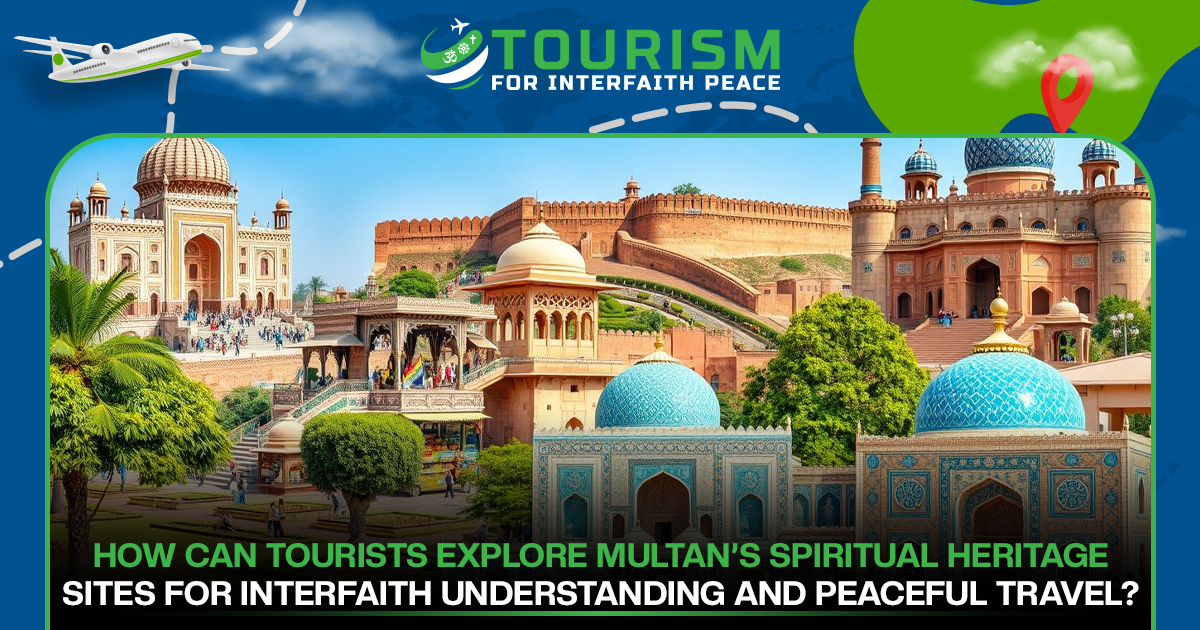
Tourists can explore Multan’s spiritual heritage by visiting its historic Sufi shrines, learning about local traditions, and traveling with respect for the city’s deep spiritual culture that welcomes people of all faiths. Multan offers a calm, meaningful interfaith tourism experience, where travel is not rushed, and understanding grows through real encounters.
Multan, often called the City of Saints, is one of the oldest living cities in South Asia. Its identity is shaped by spirituality, poetry, hospitality, and centuries of peaceful coexistence. This makes religious tourism in Multan different from typical sightseeing. It is slower, reflective, and deeply human.
Why Multan Matters for Interfaith Tourism
Multan matters for interfaith tourism because its spiritual traditions focus on shared human values rather than religious boundaries. For centuries, people from different backgrounds have visited Multan to seek peace, guidance, and learning. This has made the city a natural center for cultural travel in Pakistan. Sufi teachings in Multan emphasize humility, service, and compassion.
These values are easy to understand even for first-time visitors, which is why Multan is often described as a welcoming city for interfaith travelers. In this context, Tourism & Interfaith Pakistan (TIP), guided by a broader vision linked with Al Sadat Group’s leadership, promotes respectful interfaith travel rooted in heritage, dialogue, and peaceful cultural exchange.
Multan’s Major Sufi Shrines
Tourists can best understand Multan’s spiritual heritage by beginning with its most respected Sufi shrines. These sites are central to heritage tours in Multan and offer insight into how spirituality shaped daily life in the city.
Shrine of Bahauddin Zakariya
The Shrine of Bahauddin Zakariya reflects the roots of Sufi thought in Multan and its role in spreading values of tolerance and learning. Built in the 13th century, the shrine’s simple but powerful architecture and peaceful atmosphere help visitors understand why Multan became a center of spiritual learning.
Visitors often notice that people of different backgrounds sit together quietly, which shows how interfaith tourism in Multan works in real life, not through speeches, but through shared presence.
Shrine of Shah Rukn-e-Alam
The Shrine of Shah Rukn-e-Alam is one of Multan’s most recognized spiritual landmarks and a symbol of unity. Built in the 14th century, its large dome and blue tilework draw visitors, but its real impact comes from the calm and respect felt inside.
This shrine plays a major role in religious tourism in Multan, welcoming locals, pilgrims, and travelers without distinction.
Explore Heritage Tours Beyond Shrines
Heritage tours of Multan become more meaningful when travelers explore the old city beyond major shrines. Walking through narrow streets like Hussain Agahi Bazaar, historic mosques, bazaars, and traditional neighborhoods helps visitors see how spirituality is part of everyday life.
These walks explain why cultural travel in Pakistan is not only about monuments, but about understanding how communities live, share, and respect traditions over time.
Travel With Respect and Cultural Awareness
Respectful behavior is essential for peaceful interfaith travel in Multan. Simple actions that help create positive and respectful experiences include:
- Dressing modestly when visiting shrines and spiritual sites
- Observing quietly during prayers and religious gatherings
- Asking permission before taking photos of people or sacred spaces
- Following local guidance on entry areas, timings, and customs
Plan Travel for Comfort and Peace
Thoughtful planning allows tourists to experience Multan’s spiritual heritage without stress. A few practical steps can help make religious tourism in Multan comfortable and meaningful:
- Visiting heritage sites during daylight hours for ease and comfort
- Using local guides to better understand the cultural and spiritual context
- Sticking to known heritage routes, especially for first-time visitors
- Keeping extra time for reflection, as Multan follows a slow and calm pace
Conclusion
Multan offers tourists a rare chance to experience spiritual heritage in a peaceful, respectful setting. Through interfaith tourism in Multan, visitors can explore shrines, heritage routes, and daily life that reflect tolerance and shared values.
For travelers seeking understanding rather than entertainment, Multan remains one of Pakistan’s most meaningful destinations.
FAQs
Is Multan suitable for interfaith tourism?
Yes, Multan is well-suited for interfaith tourism because its Sufi traditions welcome people from all backgrounds and emphasize peace and coexistence.
Which sites should tourists visit first in Multan?
The shrines of Bahauddin Zakariya and Shah Rukn-e-Alam are the best starting points for heritage tours in Multan.
Is religious tourism in Multan safe for visitors?
Yes, religious tourism in Multan is generally safe, especially when tourists follow local guidance and visit well-known heritage areas.
Do non-Muslims visit Sufi shrines in Multan?
Yes, Sufi shrines in Multan are open to people of all faiths and are commonly visited by non-Muslim travelers and researchers.
How does Multan support cultural travel in Pakistan?
Multan supports cultural travel in Pakistan by preserving spiritual traditions, historic neighborhoods, and peaceful community practices.