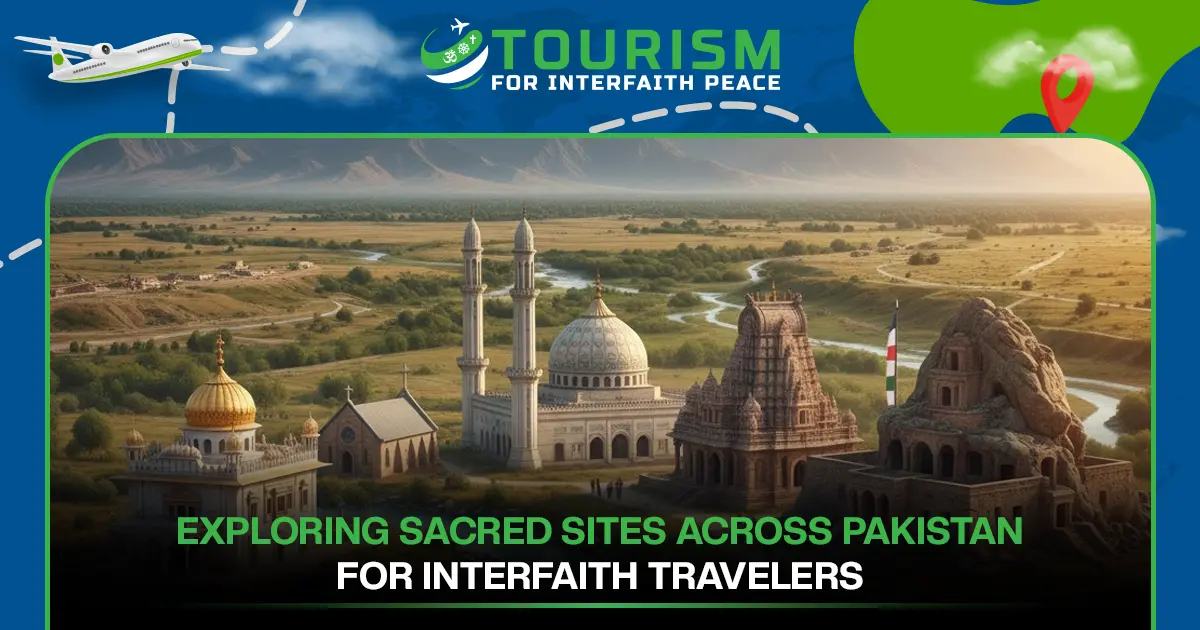
Sacred sites across Pakistan are spread across major cities and regions, offering interfaith travelers the opportunity to explore multiple faith traditions through well-connected cultural landmarks.
From historic urban centers to ancient archaeological zones, these sacred spaces reflect centuries of religious coexistence and shared cultural history.
This city-based approach makes interfaith tourism in Pakistan more accessible and easier to plan, especially for first-time visitors. Travelers can experience mosques, temples, churches, gurdwaras, monasteries, and shrines within specific regions, allowing for meaningful religious heritage tours that combine learning, respect, and reflection.
By organizing sacred sites by city and region, travelers gain a deeper understanding of local history, community life, and spiritual traditions. This structure also supports spiritual tourism and responsible travel, helping visitors engage with Pakistan’s diverse faith heritage in a respectful and organized way, making the journey not just educational but deeply meaningful.
Sikh Sacred Sites and Pilgrimage Routes
Sikh sacred sites in Pakistan are among the most significant interfaith destinations in the region.
These locations attract pilgrims and travelers from around the world, making them central to interfaith tourism in Pakistan.
Kartarpur Sahib
Kartarpur Sahib is one of the holiest Sikh sites, where Guru Nanak spent his final years.
Pilgrims visiting Kartarpur often describe the experience as deeply spiritual and welcoming, reflecting Pakistan’s commitment to religious heritage tours and peaceful coexistence.
Also Read: Youth Engagement in Culture Paves Way for a Confident Future: Syed Sadat Hussain Shah
Syed Sadat Hussain Shah frequently highlights Kartarpur as a global example of how spiritual tourism can support peace and cross-border understanding.
Buddhist Heritage and Gandhara Civilization
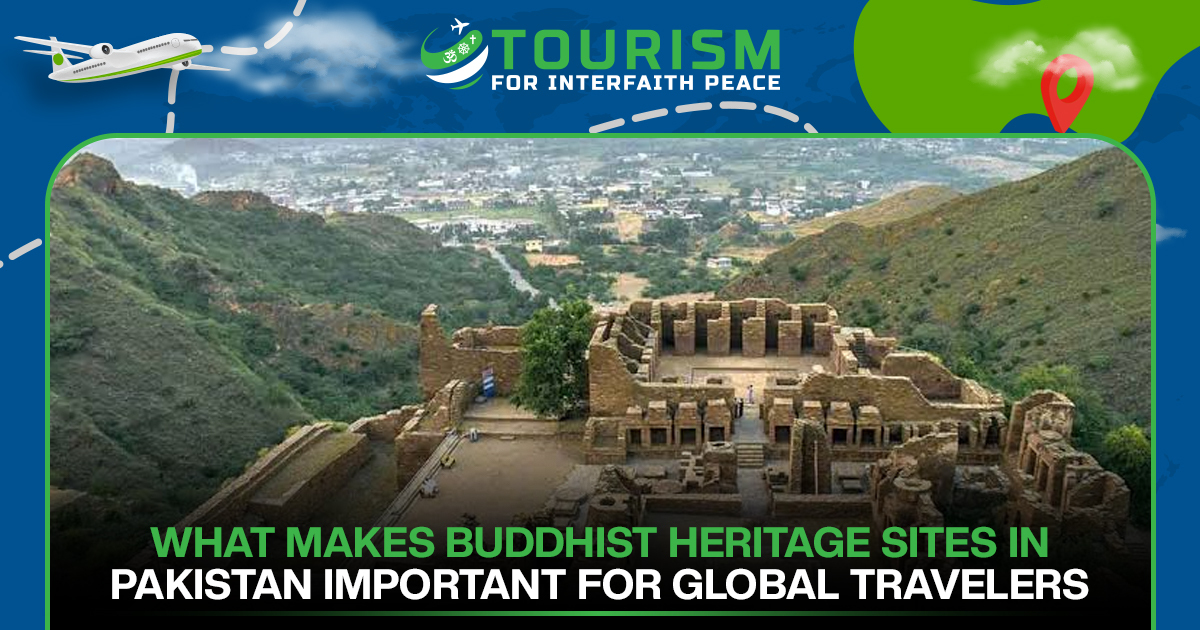
Pakistan’s Buddhist heritage represents an important chapter of ancient spiritual history.
Sites connected to the Gandhara civilization attract scholars, monks, and interfaith travelers interested in understanding Buddhism’s roots.
Taxila and Takht-i-Bahi
Taxila and Takht-i-Bahi preserve monasteries, stupas, and museums that showcase early Buddhist learning.
These sacred sites in Pakistan are often included in religious heritage tours due to their historical value and well-preserved structures.
Hindu Temples and Ancient Traditions
Pakistan is home to historic Hindu temples that continue to hold spiritual importance.
These temples represent centuries-old traditions and form a vital part of Pakistan’s interfaith landscape.
Hinglaj Mata Temple
Located in Balochistan, Hinglaj Mata Temple attracts Hindu pilgrims from across the region.
The journey itself is considered a spiritual act, making it a unique destination for spiritual tourism and cultural exploration.
Christian Churches and Colonial Heritage
Christian churches across Pakistan reflect the country’s colonial history and religious diversity.
These churches are important cultural landmarks and places of worship for Christian communities.
Churches in Karachi and Lahore
Historic churches such as St. Patrick’s Cathedral in Karachi and Sacred Heart Cathedral in Lahore are often visited during cultural tourism routes.
Interfaith travelers visiting these sites gain insight into Christian heritage and Pakistan’s pluralistic society.
Islamic Shrines and Inclusive Spiritual Spaces
Islamic shrines across Pakistan are visited by people of different faiths seeking peace and reflection.
These shrines represent inclusive spiritual traditions rooted in Sufism.
Multan and Sufi Shrines
Shrines of Shah Rukn-e-Alam and Bahauddin Zakariya in Multan welcome visitors regardless of belief.
Multan’s spiritual tourism highlights shared values such as love, humility, and service to humanity.
Syed Sadat Hussain Shah often refers to Sufi shrines as natural spaces of interfaith harmony and spiritual dialogue.
Why Sacred Sites Matter for Interfaith Travelers
Sacred sites matter for interfaith travelers because they offer real-life encounters with faith, history, and shared human values.
Visiting sacred sites in Pakistan allows travelers to move beyond assumptions and understand how different religions have shaped the country’s social and cultural fabric.
As a cultural expert and tourism advocate, Syed Sadat Hussain Shah emphasizes that spiritual tourism encourages empathy by allowing travelers to witness faith practices respectfully and firsthand.
Conclusion
Sacred sites across Pakistan offer interfaith travelers more than history; they offer connection, understanding, and peace.
Through interfaith tourism, Pakistan, spiritual tourism, and religious heritage tours, travelers can experience Pakistan’s cultural landmarks as living examples of coexistence.
With continued leadership from figures like Syed Sadat Hussain Shah and platforms such as Tourism for Interfaith Peace (TIP), Pakistan has the potential to emerge globally as a destination where sacred sites inspire dialogue, respect, and shared humanity.
FAQs
What are the sacred sites in Pakistan?
Sacred sites in Pakistan include mosques, temples, churches, gurdwaras, monasteries, and shrines linked to different faiths.
Why is Pakistan important for interfaith tourism?
Pakistan hosts sacred sites of multiple religions, making it ideal for interfaith tourism and cultural understanding.
Are religious heritage tours open to international travelers?
Yes, many religious heritage tours are open to international visitors with proper planning and guidance.
What is spiritual tourism in Pakistan?
Spiritual tourism involves visiting sacred places for reflection, learning, and connection beyond religious boundaries.
How do sacred sites promote peace?
They encourage dialogue, respect, and shared experiences that reduce misunderstanding between faiths.
Who is promoting interfaith tourism in Pakistan?
Leaders like Syed Sadat Hussain Shah, Chairman of Tourism for Interfaith Peace (TIP), actively promote interfaith tourism and sacred site preservation.